NexPets: Puppies
Kids, Pet Simulation (Nex Playground)
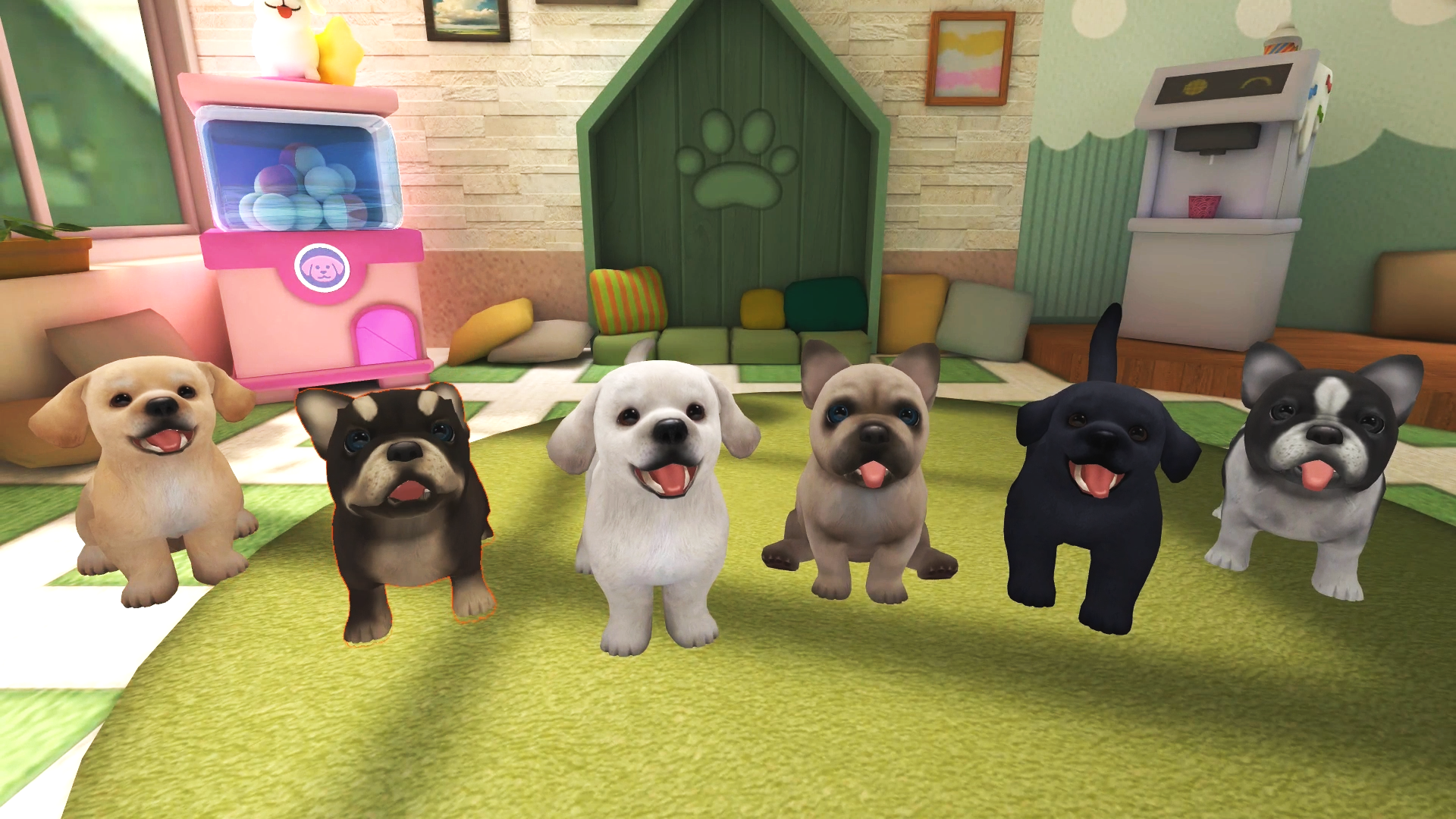
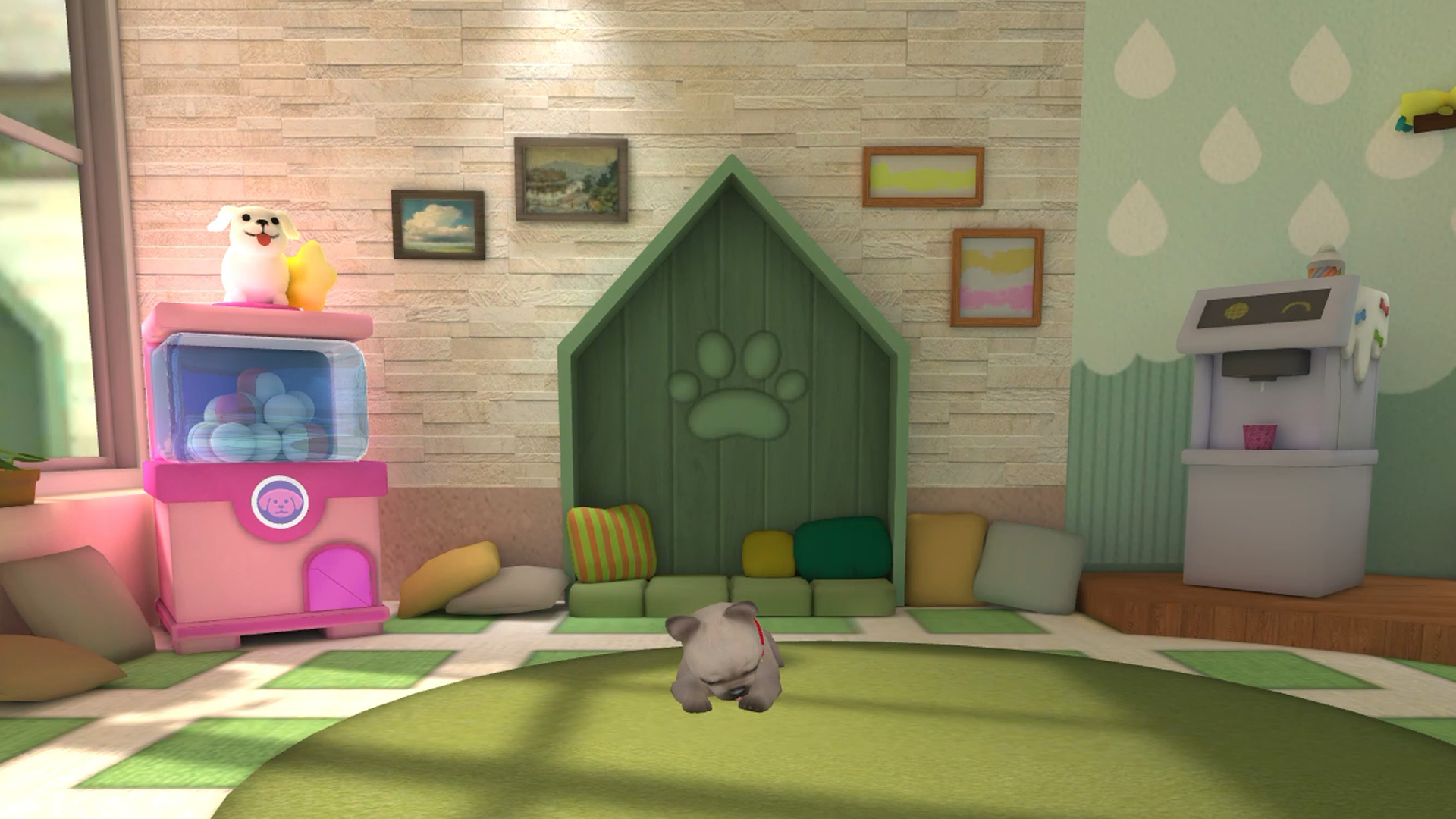
NexPets: Puppies is a kid-friendly pet simulation game for the Nex Playground, where players adopt and care for a virtual puppy using full-body motion gestures instead of traditional controller input.
Players can pet, feed, wash, and play with their puppy through physical interaction designed specifically for younger audiences.
I joined the project during late-stage development as the team worked toward launch. Working with a small cross-functional team of approximately six developers, my focus was on core gameplay, interaction design, and overall UX.
Game Director
Notable Achievements
-
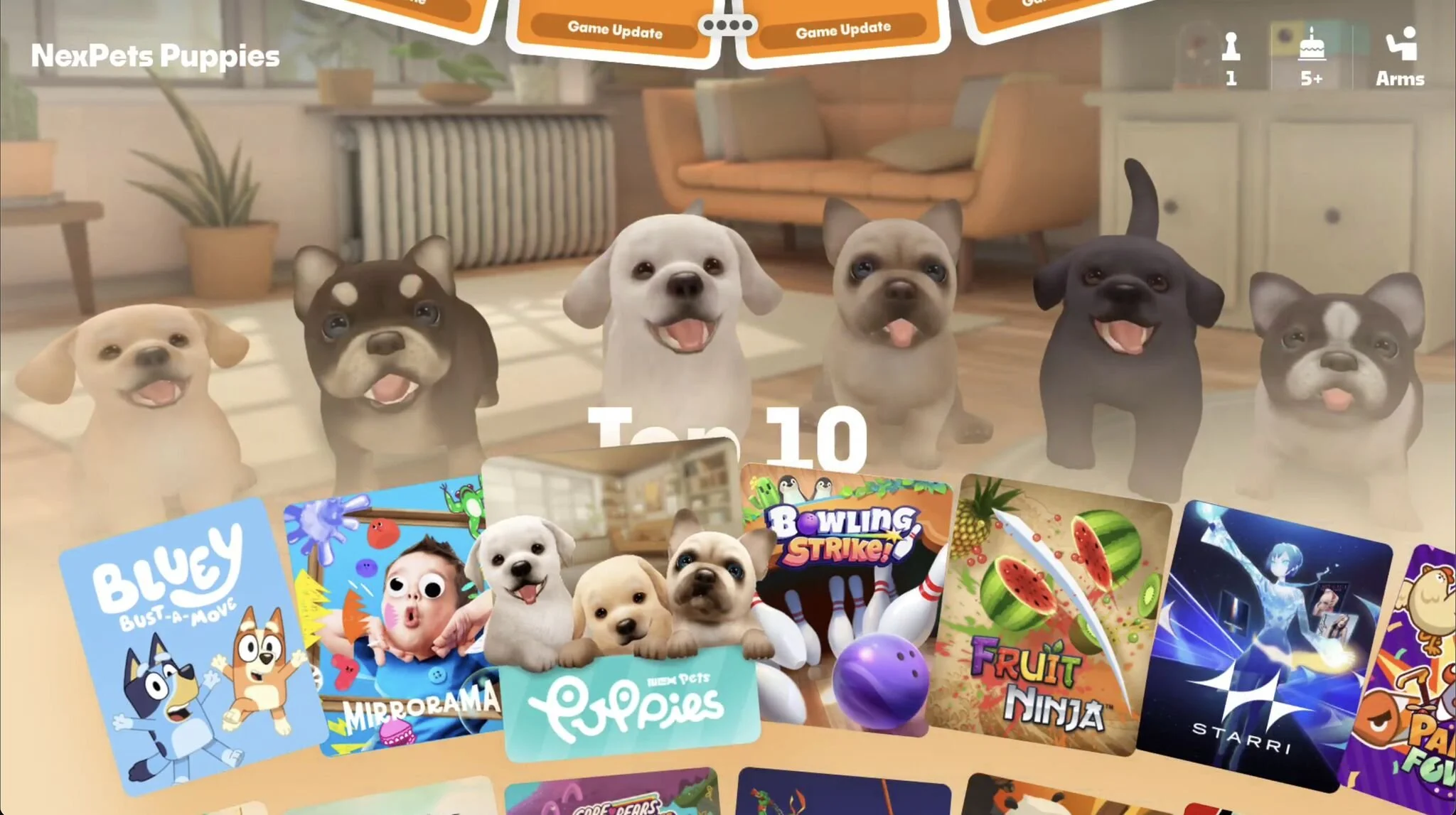
NexPets:Puppies made new puppy owners all over the world when the game launched and remained the #1 game on the Nex Playground for several weeks
Remains within the top 5 games on the Nex Playground to this day
-
Streamlined the UX to allow the puppy to always be onscreen
Reduced amount of UX interactions necessary to engage in different activities
-
Gave players more engaging, emotional reasons to care for their pup
Iterated and tested with real kids to understand emotional connection
NexPets: Puppies - Case Study
With no controller and a young audience, traditional UX breaks down. Here’s how I helped design a motion-based pet simulation that made interaction intuitive, resulting in the #1 game on the Nex Playground console.
The Problem
Early playtests revealed consistent friction, particularly among younger players.
Even simple interactions, such as selecting activities, required navigating UI menus that pulled attention away from the puppy and interrupted the physical flow of play. Younger players often struggled to transition between gesture-based interaction and traditional menu navigation.
Additionally, successfully completing activities lacked clear feedback and satisfying responses, making interactions feel less rewarding than intended.
Combined, these issues created an experience that felt more frustrating than intuitive.
UX was breaking immersion
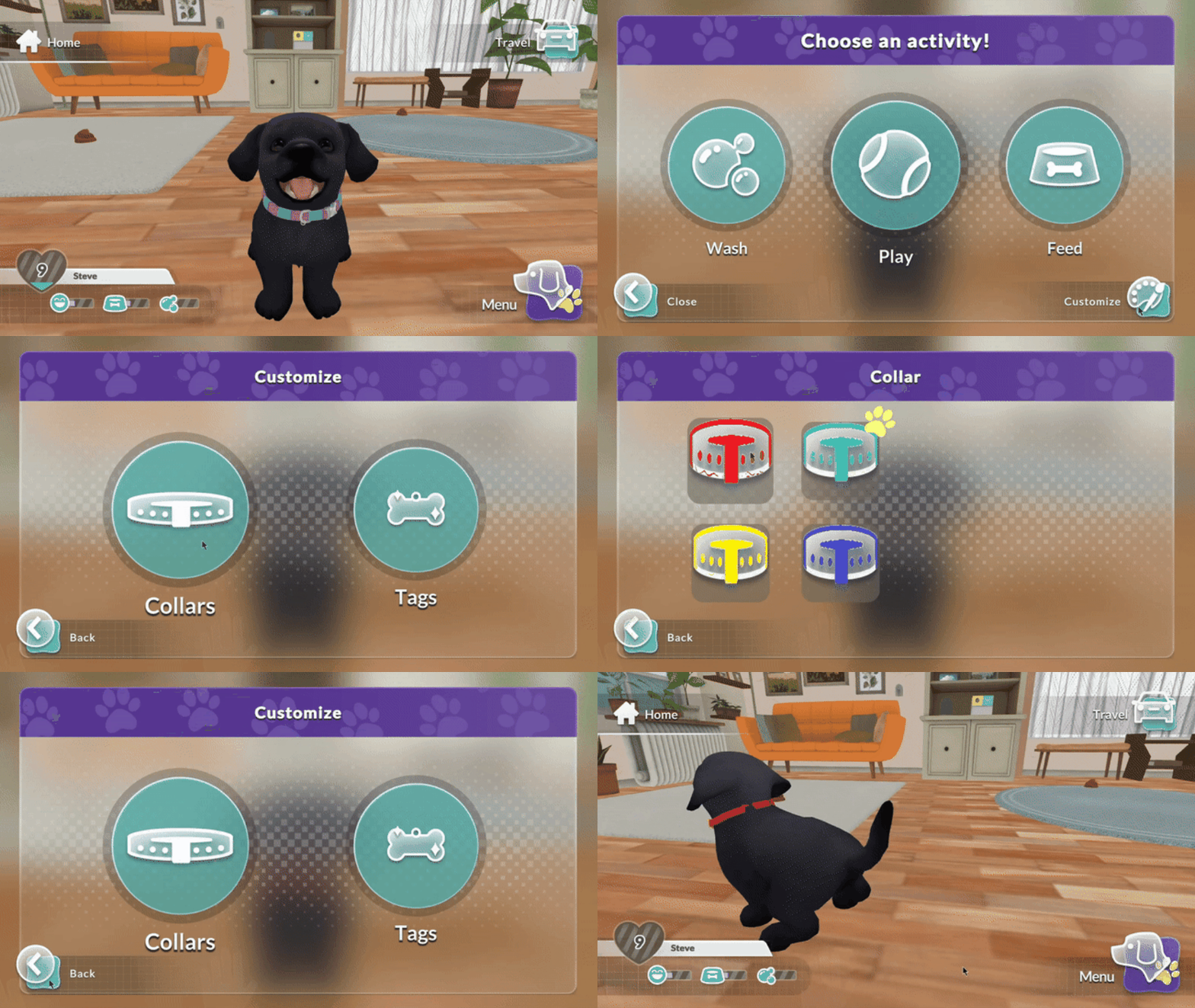
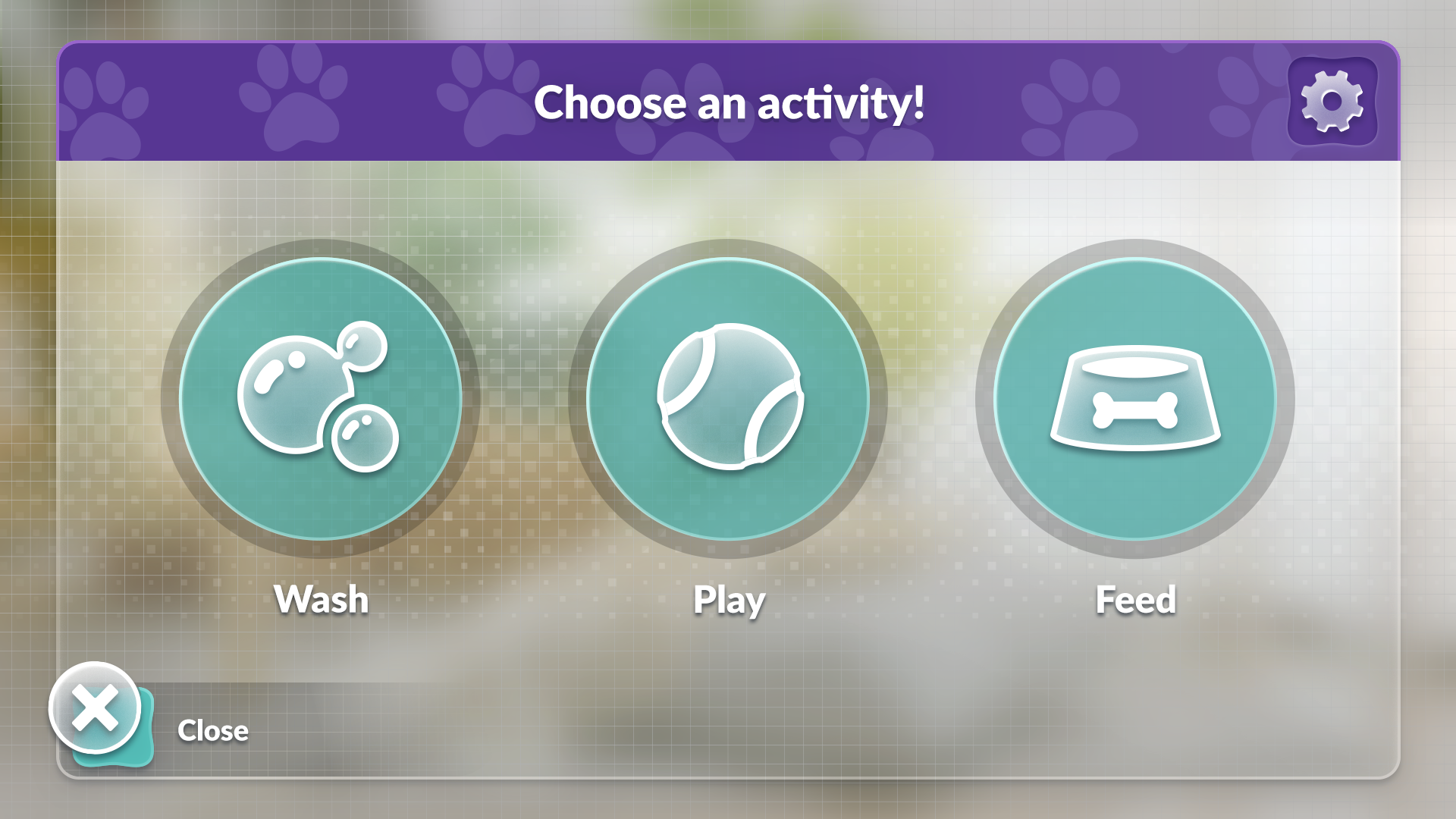
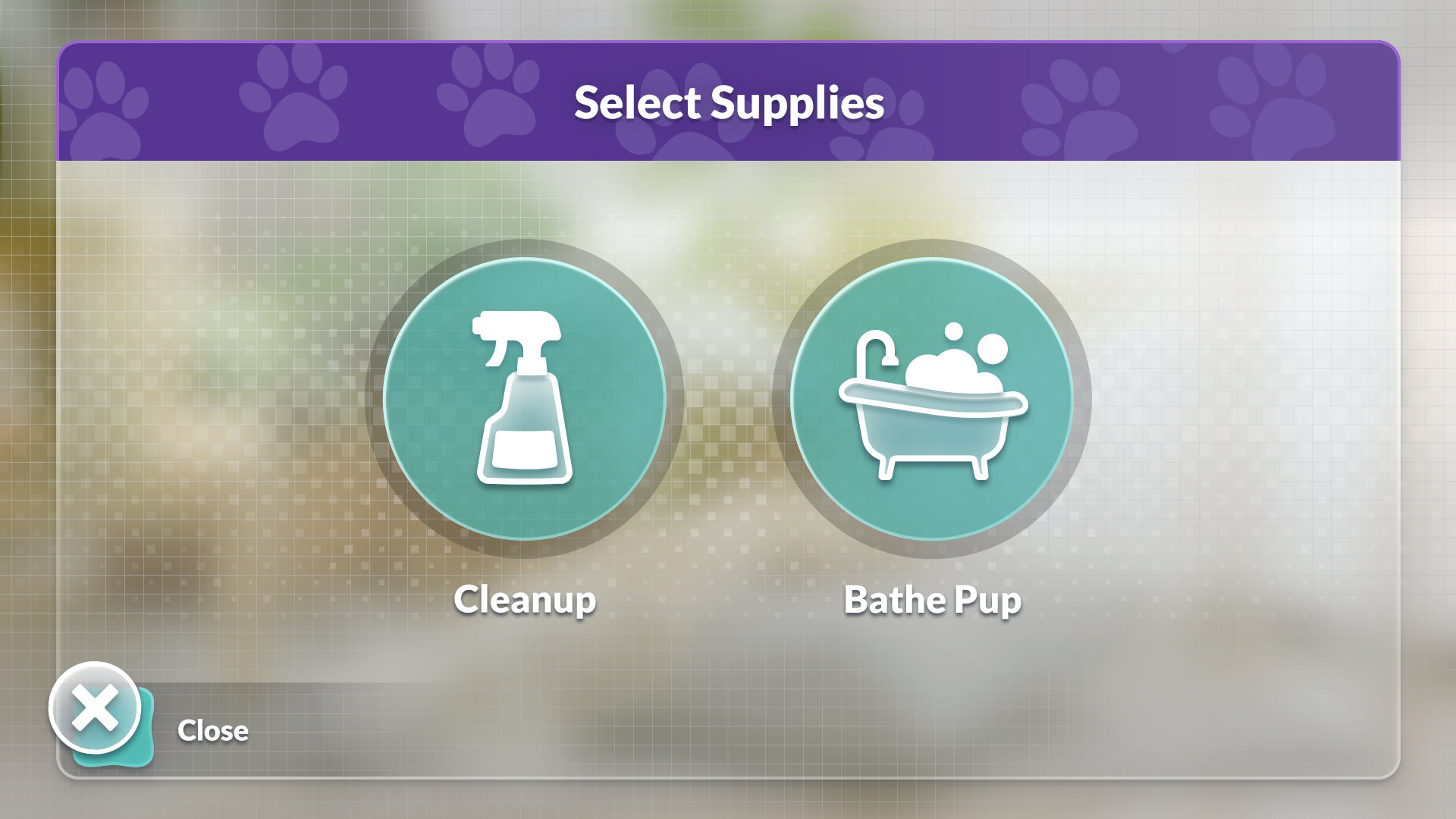
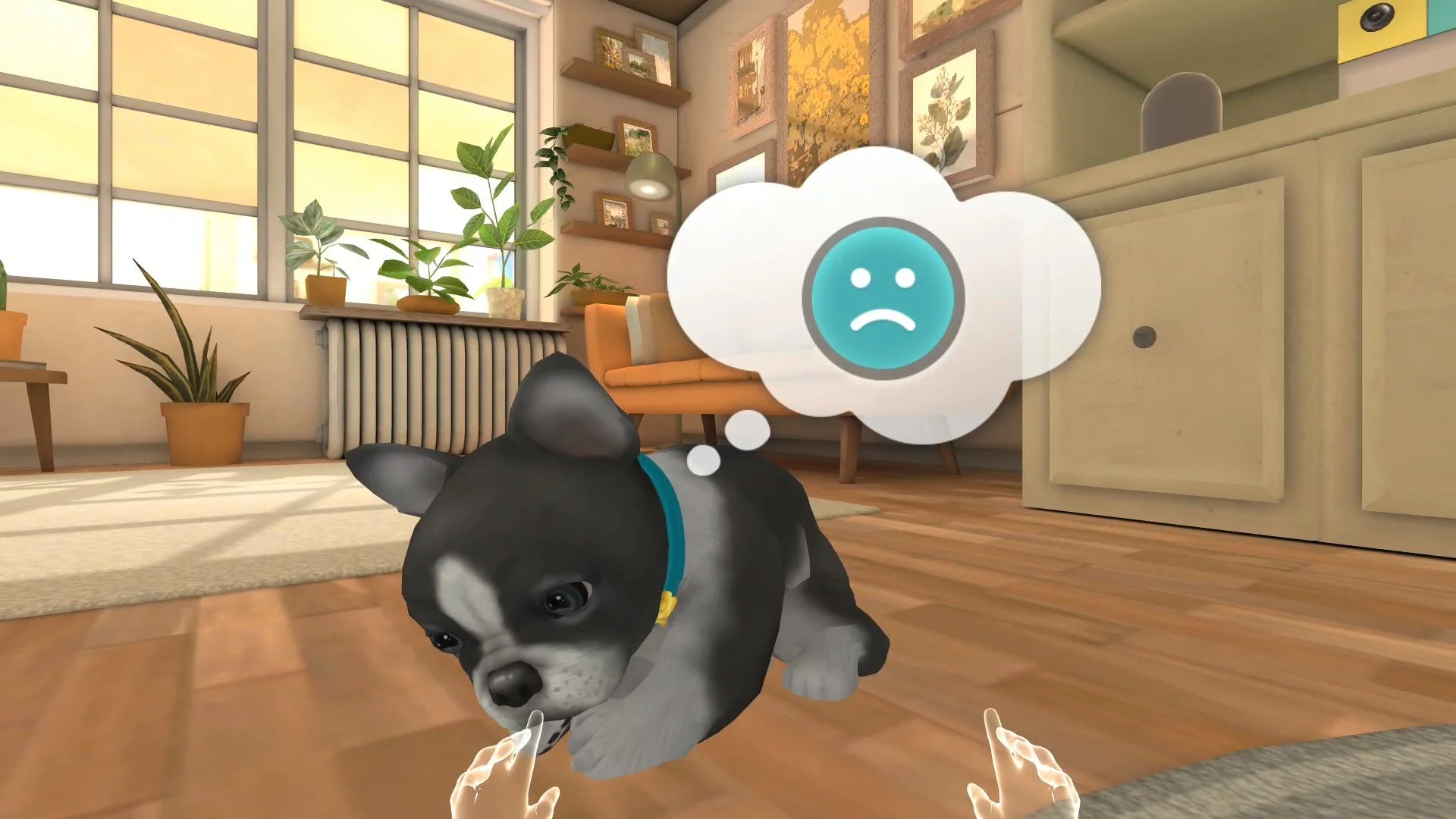
UI-heavy interactions disrupted the core experience and frequently pulled attention away from the puppy itself.
Because younger players struggled with precise menu navigation using motion controls, they often spent more time navigating UI than meaningfully interacting with their pet.
This created friction during even the simplest activities and weakened the sense of connection between player and puppy.
Core Puppy Interactions Lacked Feedback & Reward
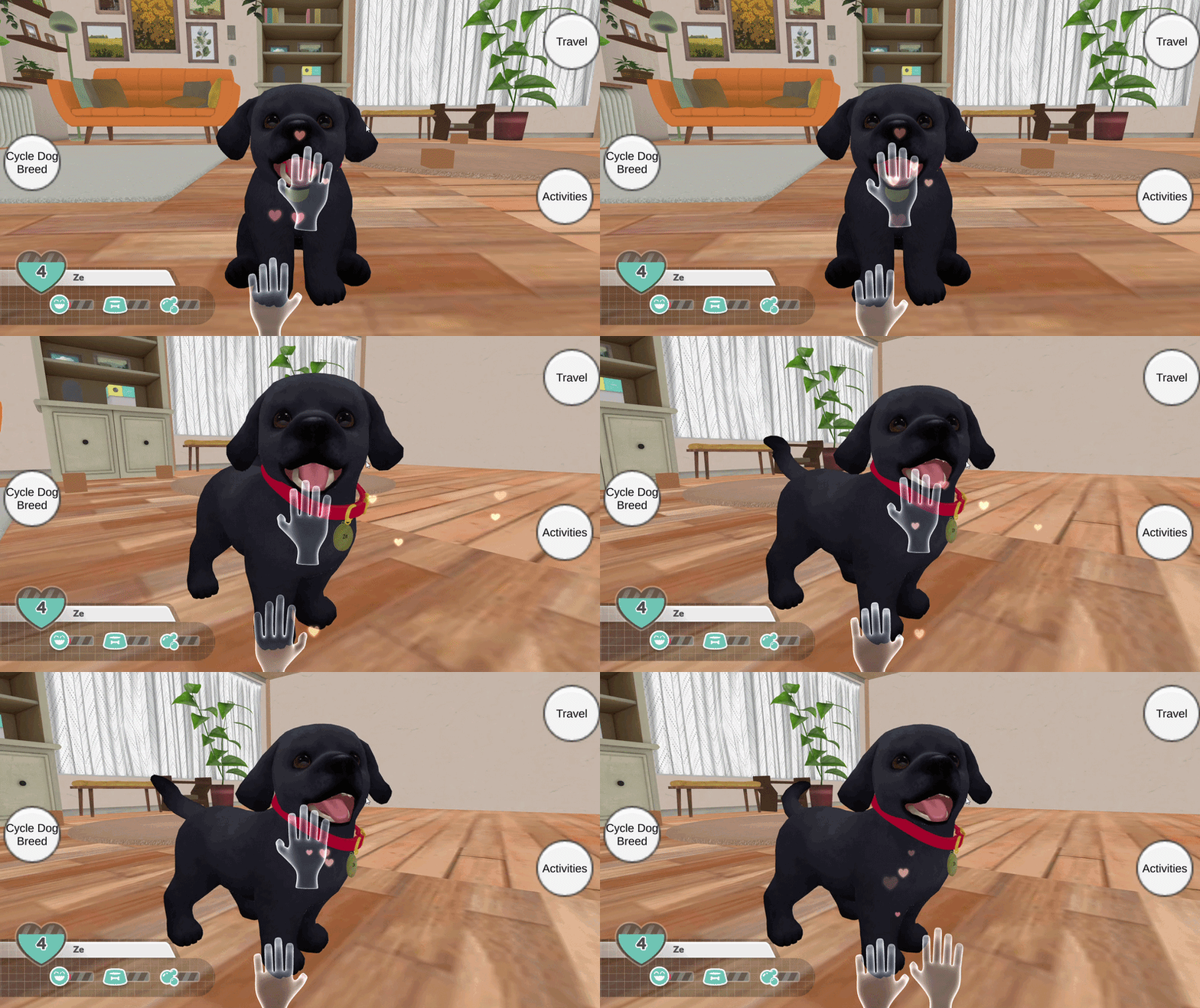
Core activities such as petting, feeding, and washing lacked meaningful visual response and satisfying feedback.
Interactions often felt flat or unresponsive, with minimal animation, VFX, or emotional reinforcement to communicate successful player actions.
As a result, activities lacked the sense of reward and emotional connection expected from a pet simulation experience.
Planned Features Added Friction Without Improving Engagement
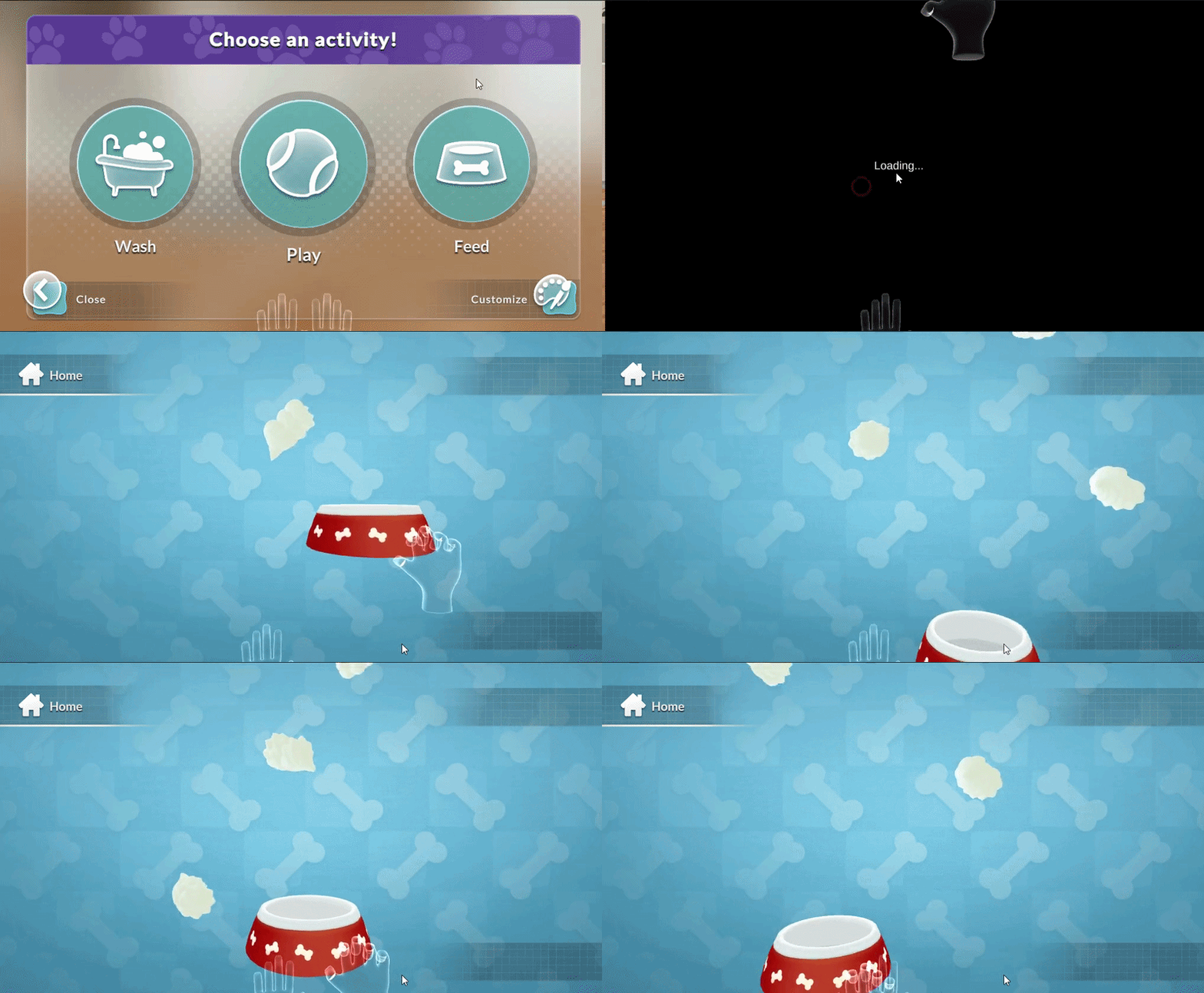
Several features planned for launch introduced additional complexity without meaningfully improving the core player experience.
For example:
Cleaning puppy waste felt more like a chore than a rewarding interaction
A feeding minigame added unnecessary steps before players could perform a simple core activity
While both ideas were directionally aligned with pet ownership simulation, neither meaningfully strengthened engagement or emotional attachment to the puppy.
My Strategy
Action Plan
The goal was to make interactions feel direct, intuitive, and physically engaging while minimizing moments where players could become disconnected from the puppy.
This also required reprioritizing development efforts, focusing on improvements to core interaction and usability over secondary features that did not meaningfully contribute to the primary player experience.
Simplify core UX and reduce unnecessary menu layers
Revisit puppy interactions to ensure each feels responsive, rewarding, and emotionally engaging
Re-evaluate secondary launch features based on player value and usability
Rather than shifting toward a more traditional remote-controlled UI model, which the Nex team suggested, I focused on strengthening motion interaction as the foundation of the experience.
Execution
Feature Prioritization
Poop Cleaning Activity - Cut from release
A planned “poop cleaning” activity was removed after evaluating its contribution to the core gameplay loop.
While the behavior itself remained for personality and humor, the interaction added unnecessary friction without meaningfully improving player engagement or attachment to the puppy.
To keep the experience focused and accessible for younger players, the system was simplified so the behavior resolved automatically off-screen.
Food Minigame - Cut from release
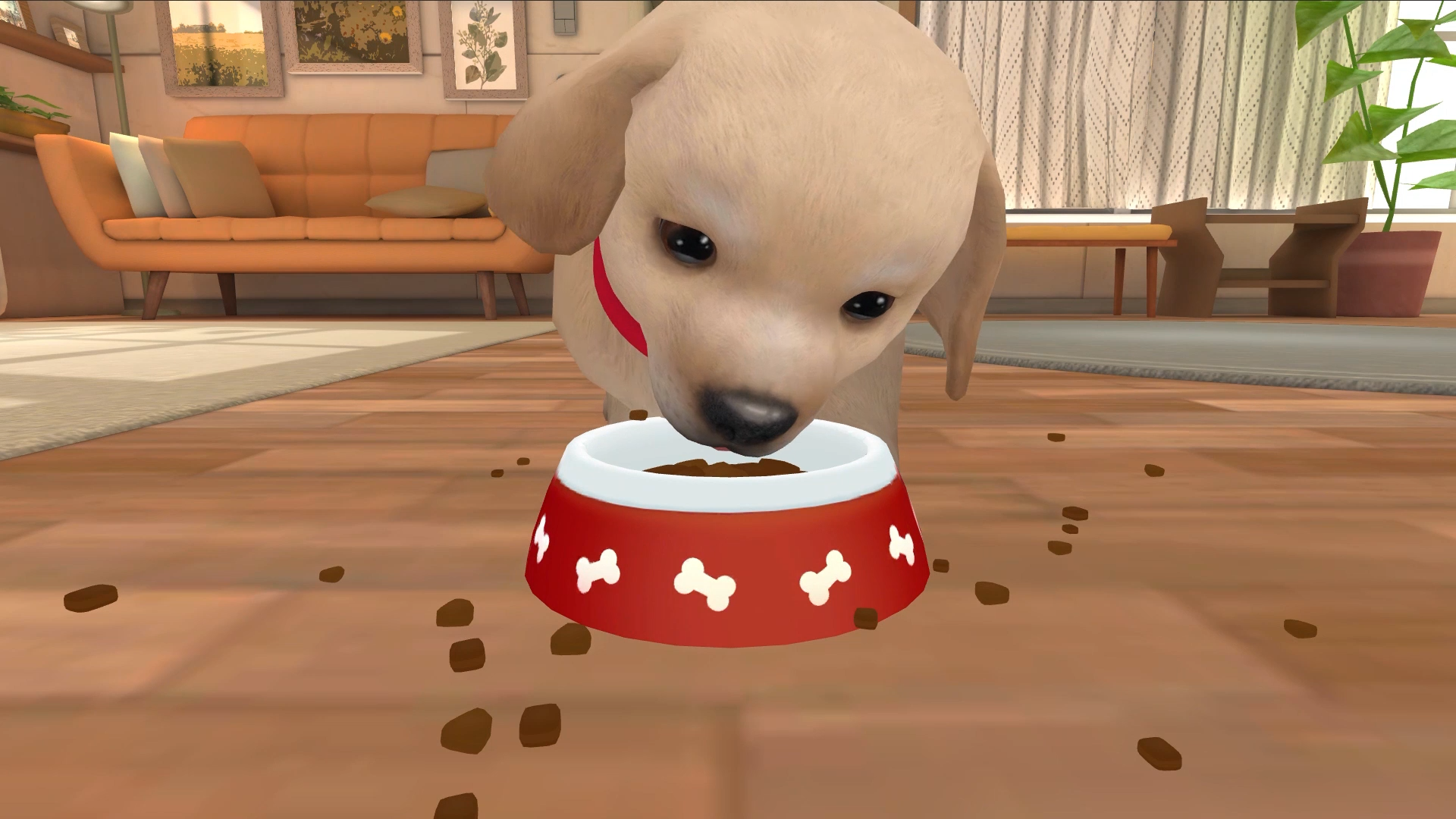
Originally, feeding the puppy required players to complete a separate minigame where they caught falling kibble in a dog bowl before the puppy could eat.
While the concept added variety, it also introduced unnecessary friction into one of the game’s most frequent core interactions.
During playtesting, younger players often struggled to understand the extra gameplay step, and parents assisting their children found the process repetitive and overly time-consuming.
To improve accessibility and maintain engagement, the minigame was removed in favor of a more direct interaction flow.
Players now simply raise the bowl to have the puppy wait patiently before lowering it to feed them, thus creating an interaction that felt more natural, intuitive, and emotionally connected.
UI/UX Simplification
Directed another game designer in accomplishing the following improvements:
Reduced reliance on nested menus
Prioritized keeping the puppy visible during interactions
Streamlined activity selection to minimize context switching
Simplified interaction flow for younger players
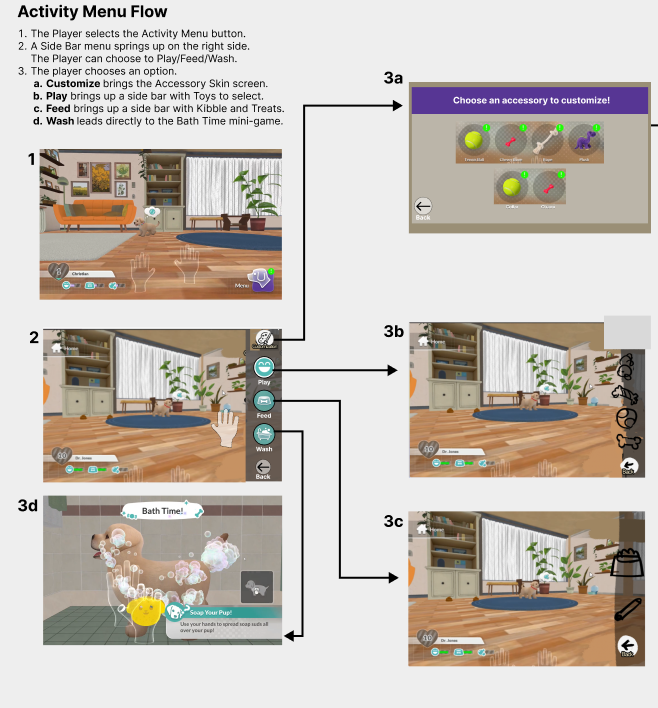
Core Interaction & Feedback Revisit
Simplified gesture requirements to improve consistency among younger players
Increased responsiveness and clarity of interaction feedback
Improved the sense of reward and satisfaction tied to successful actions
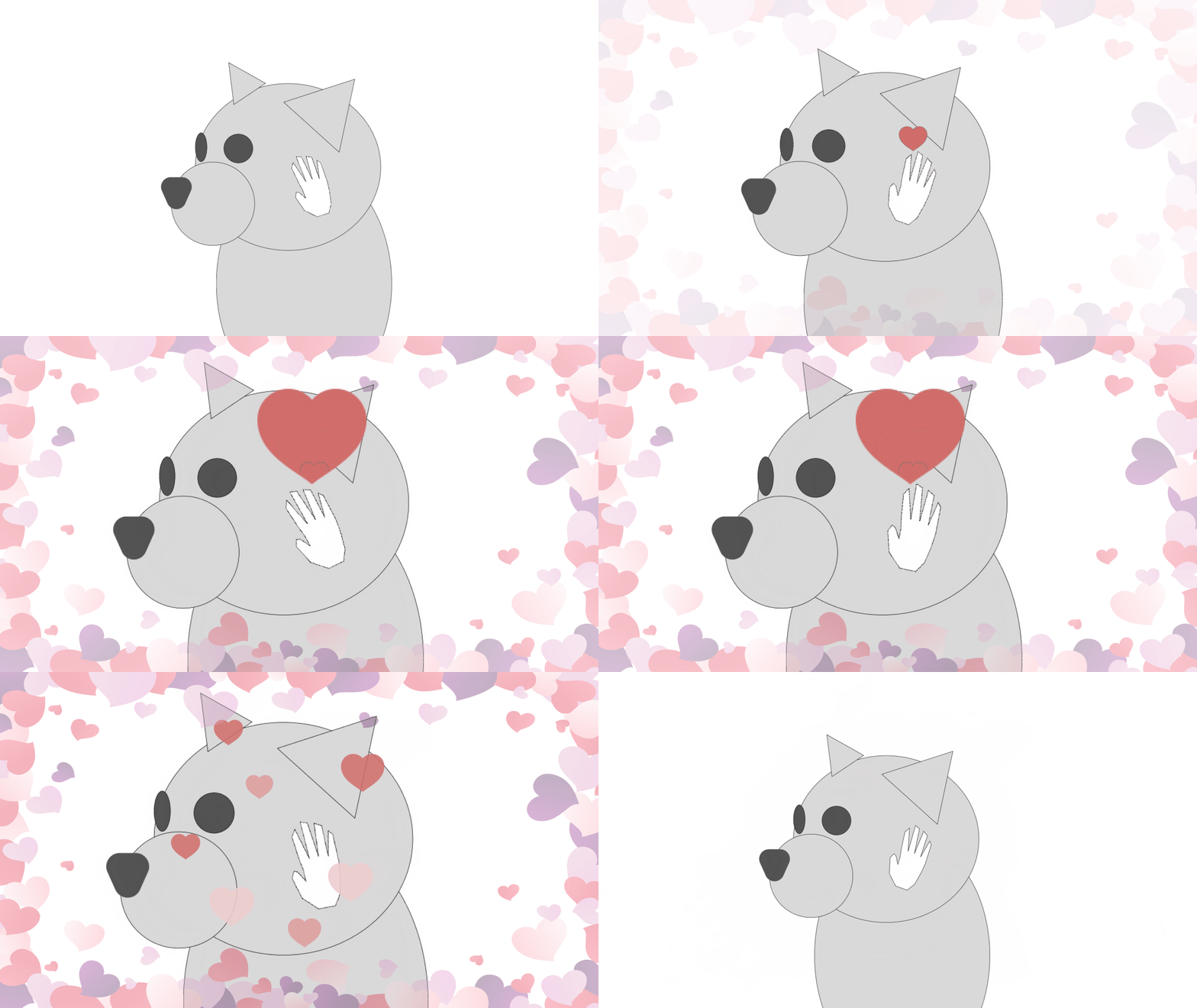
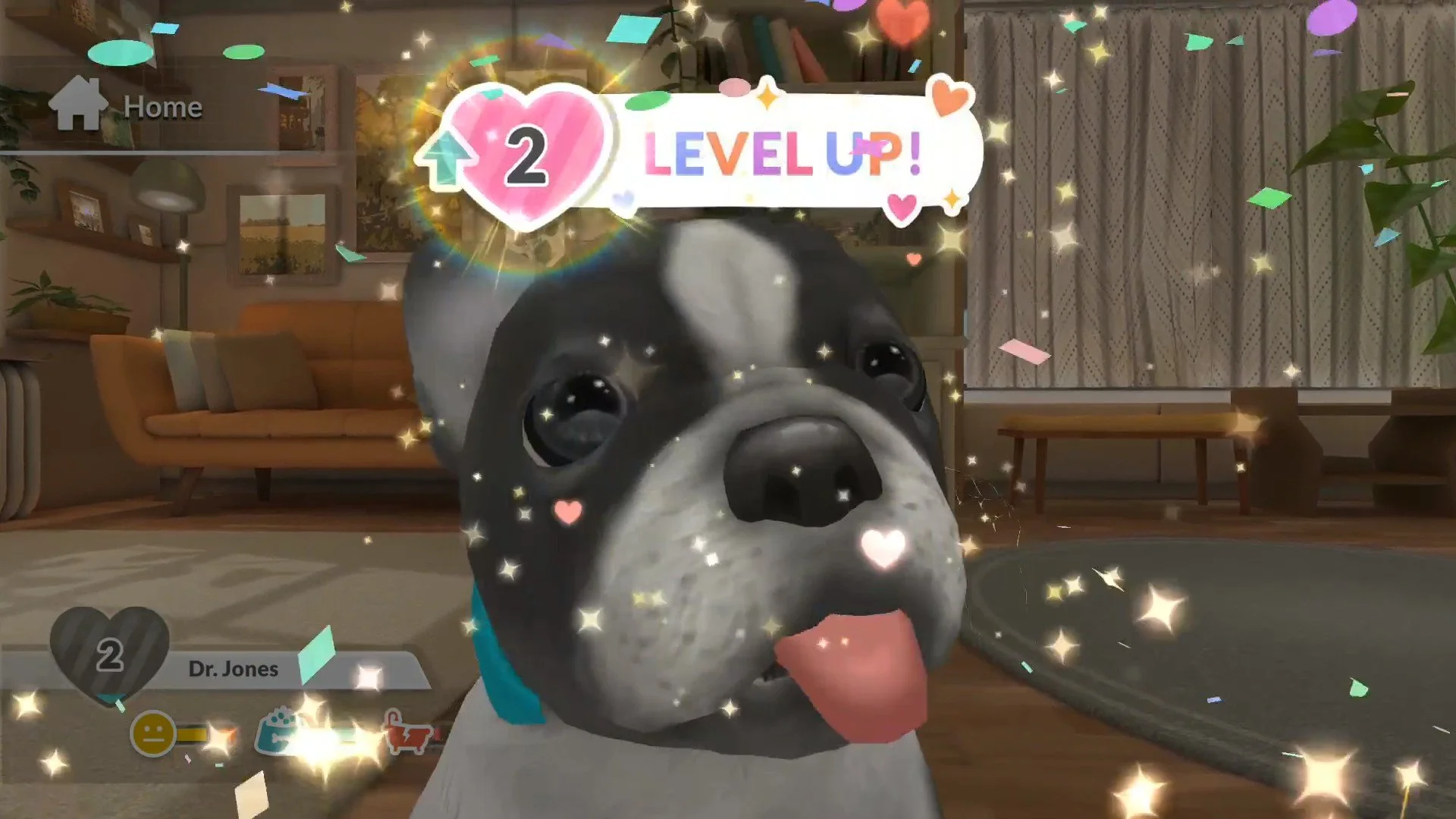
When petting the puppy, players receive escalating visual feedback to reinforce the interaction.
Subtle border effects, pulsating heart animations, and large bursts of particles were added to create a stronger sense of responsiveness and reward as the interaction continued.
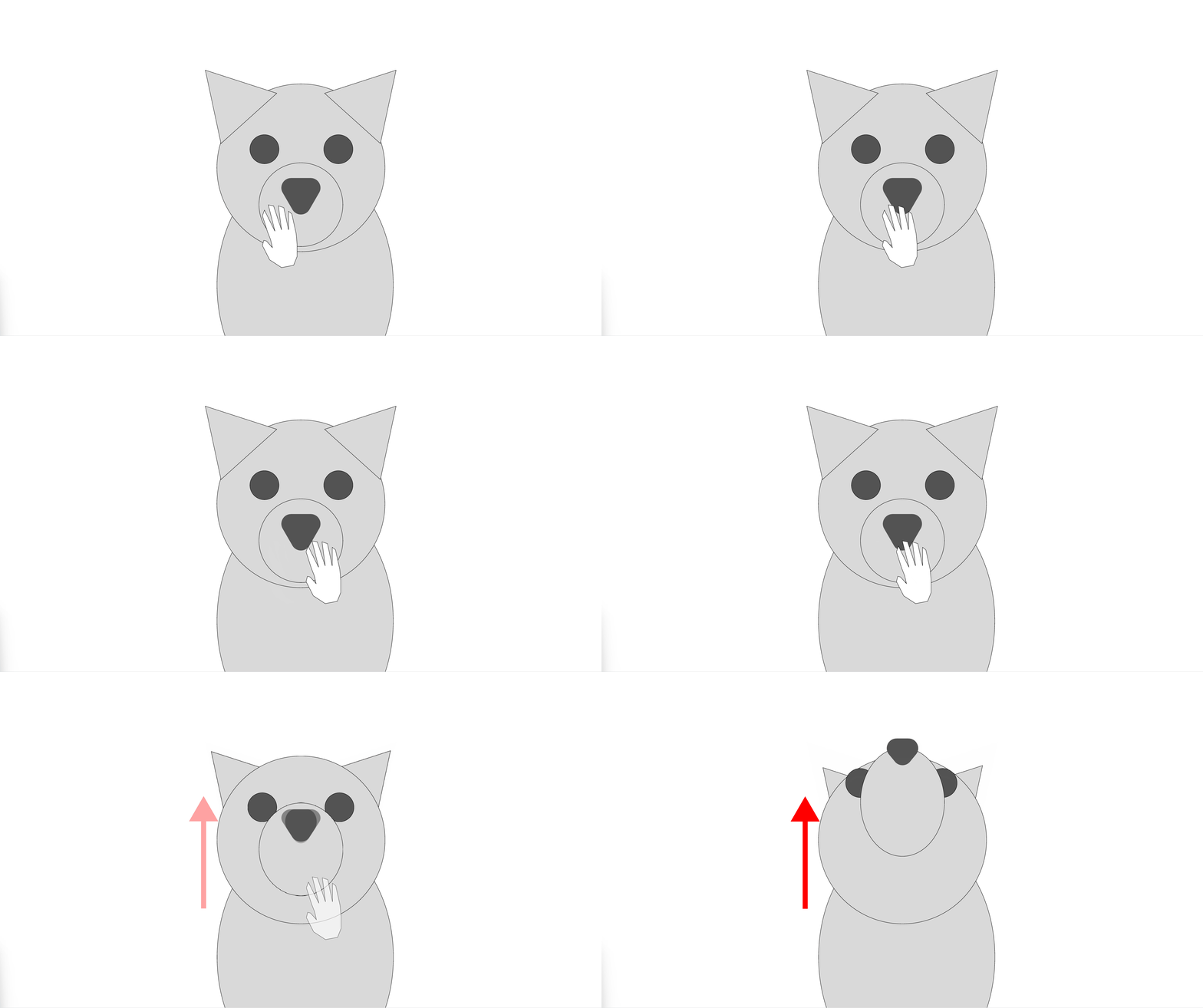
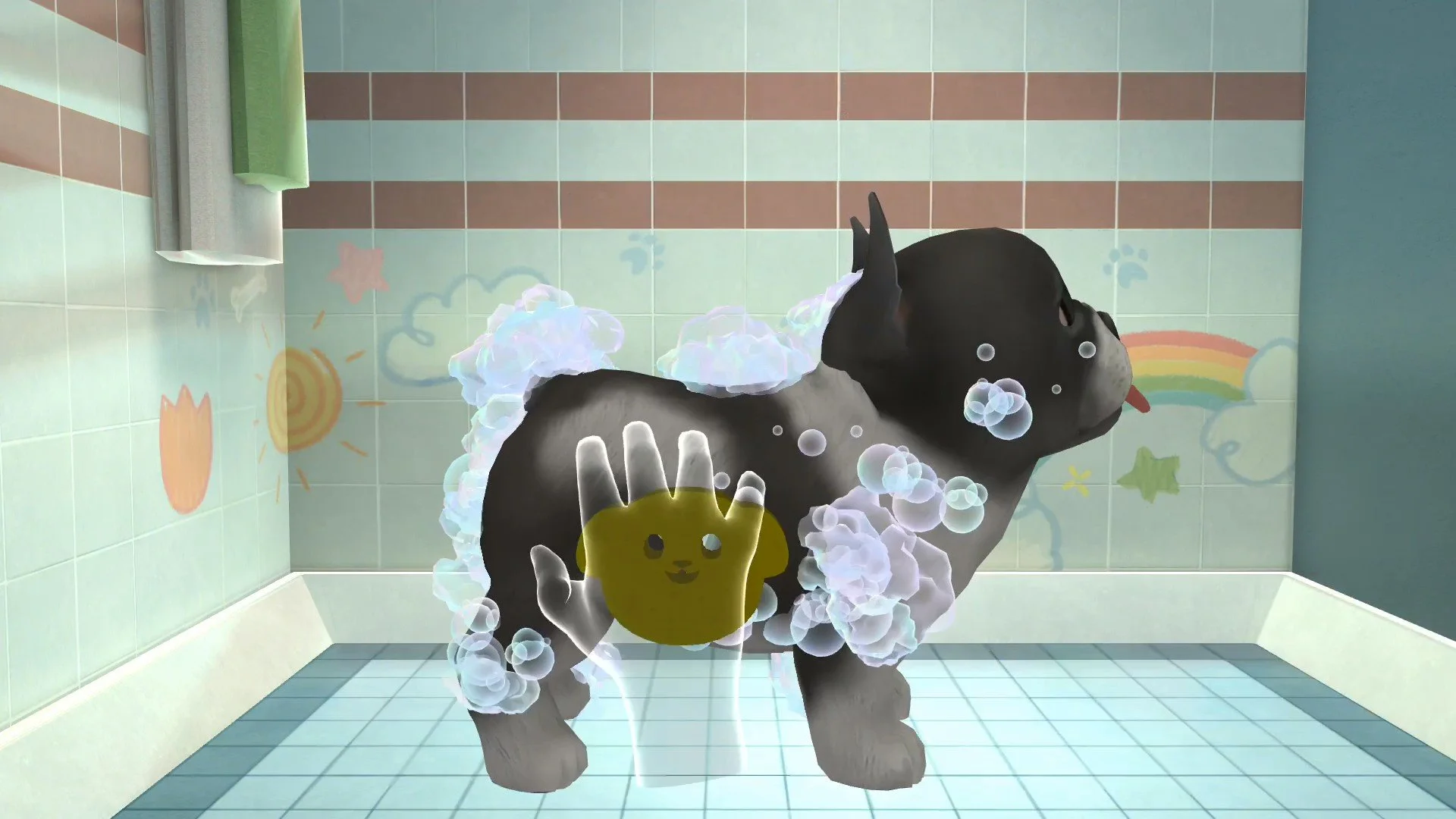
During activities such as petting and bathing, the puppy reacts dynamically through body movement, head tracking, and expressive facial animations.
These responses helped strengthen the emotional connection between player and pet by making interactions feel acknowledged and alive.
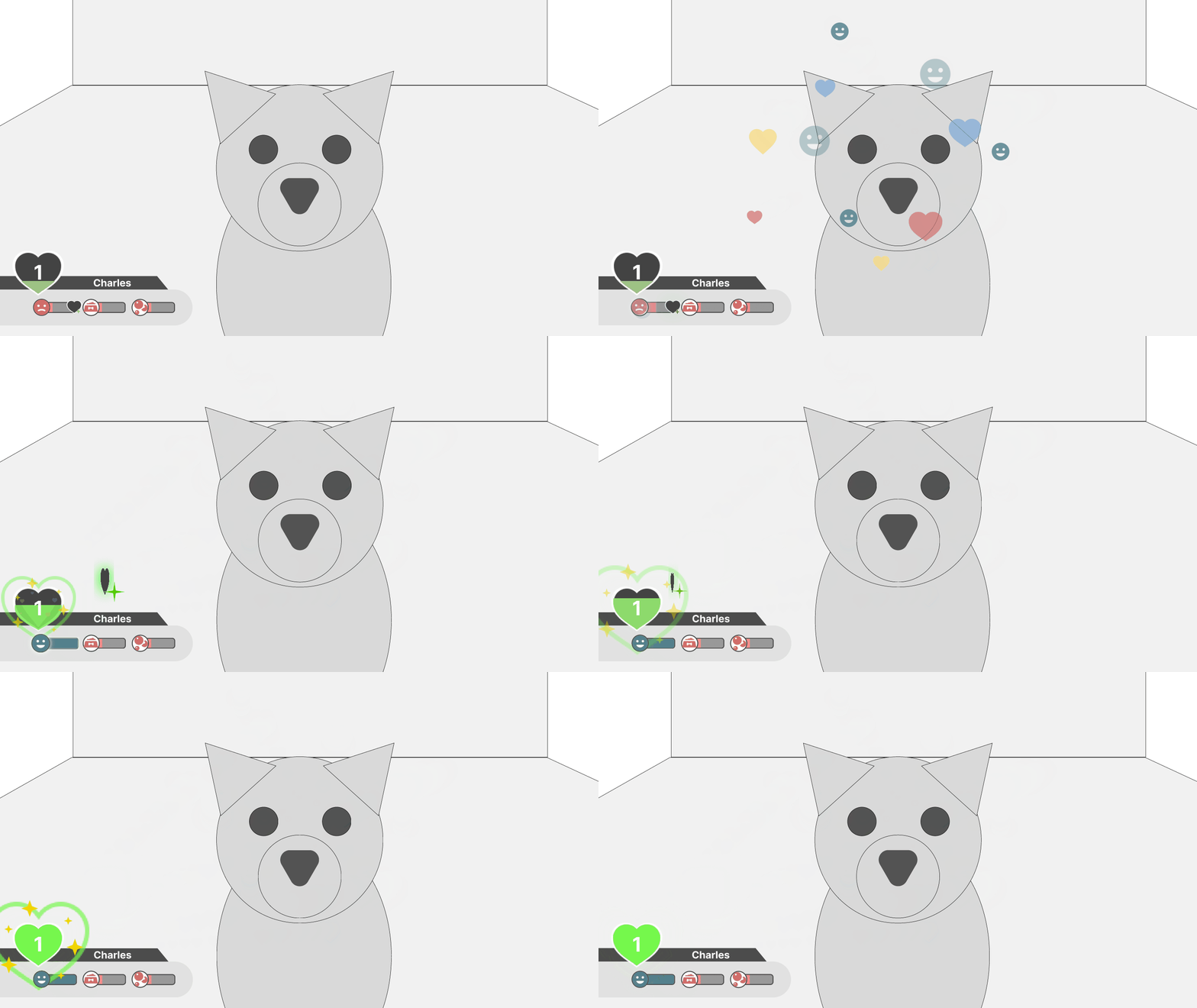
Successful interactions were reinforced with contextual VFX tied to the puppy’s Happiness, Hunger, and Hygiene systems.
Clear visual feedback helped players better understand the impact of their actions while making progression and care systems feel more rewarding.
Outcome
Following these changes, playtests showed a significant improvement in usability and engagement—particularly among toddlers and younger children. Players were able to complete gestures more consistently and engage with core activities with little-to-no friction.
Following launch:
Reached #1 on Nex Playground for 5 consecutive weeks
Continues to remain within the platform’s Top 10 titles
Simplified Core Game UI/UX
Core activity flows were redesigned to eliminate full-screen menus and reduce unnecessary UI interruptions.
This allowed players to navigate activities more efficiently while keeping the puppy visible and central to the experience at all times.
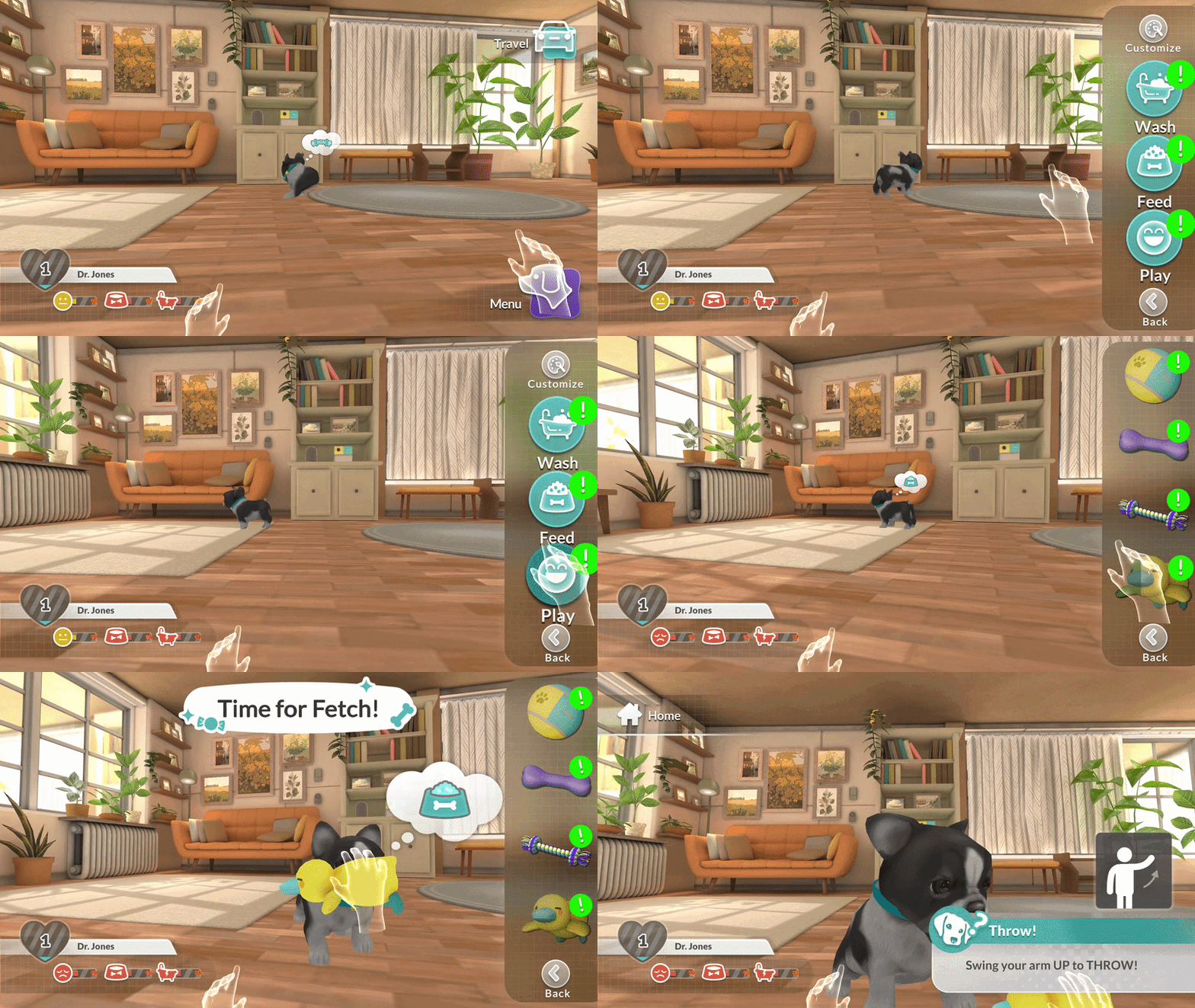
Intuitive & Responsive Core Interactions
Core interactions became significantly easier for younger players to perform by relaxing gesture precision requirements and improving contextual feedback.
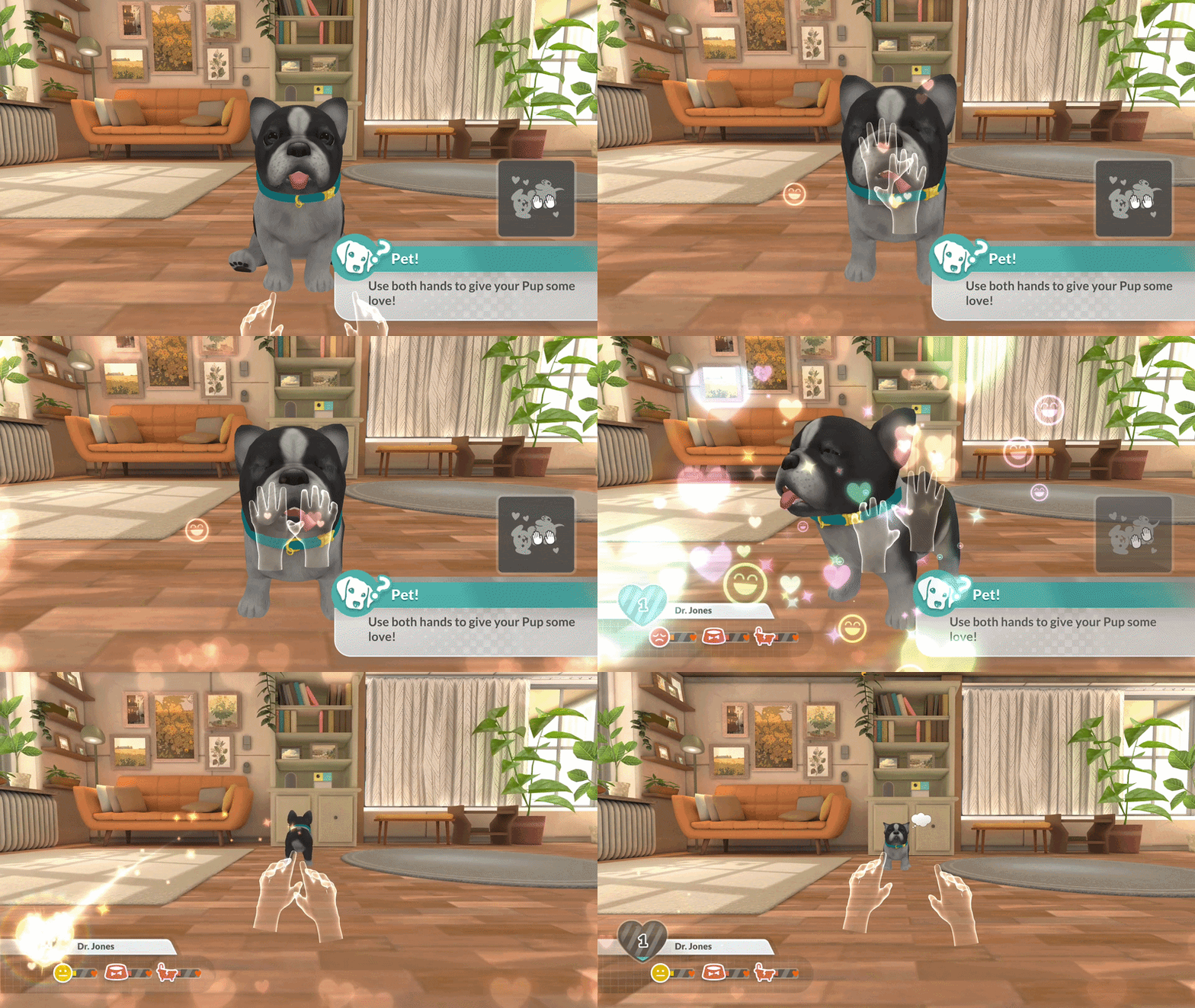
Additional VFX, puppy reactions, and contextual animations were introduced to reinforce successful interactions and strengthen the sense of connection between player and pet.
The result was a more responsive, rewarding, and emotionally engaging experience that better aligned with player expectations.
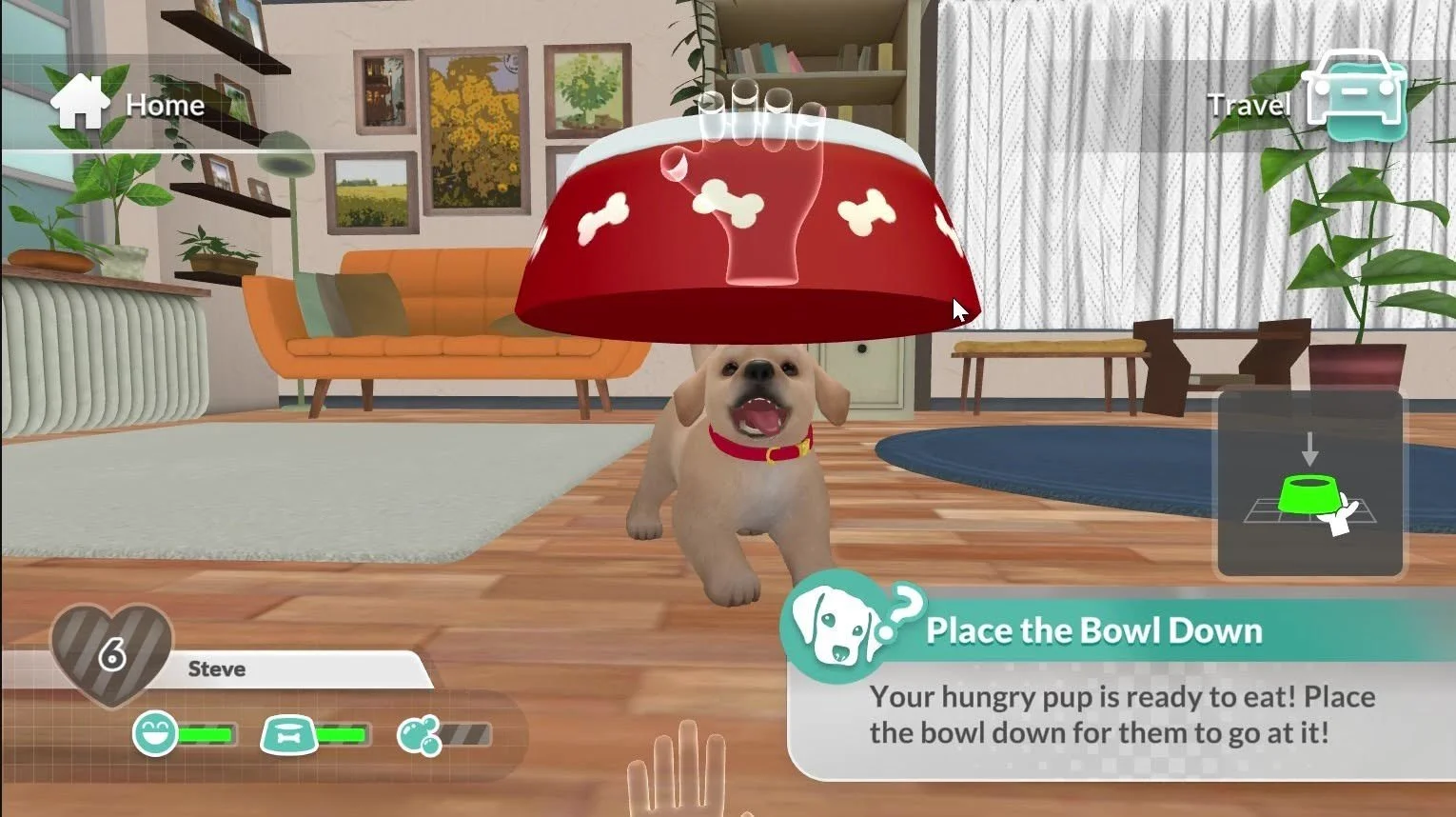
Feeding interactions were redesigned to feel more intuitive and natural.
Instead of completing a separate minigame, players now simply raise the bowl to signal the puppy to wait before lowering it to feed them.
This created a smoother interaction flow that felt more accessible for younger players while also resonating more naturally with real-world pet behavior.
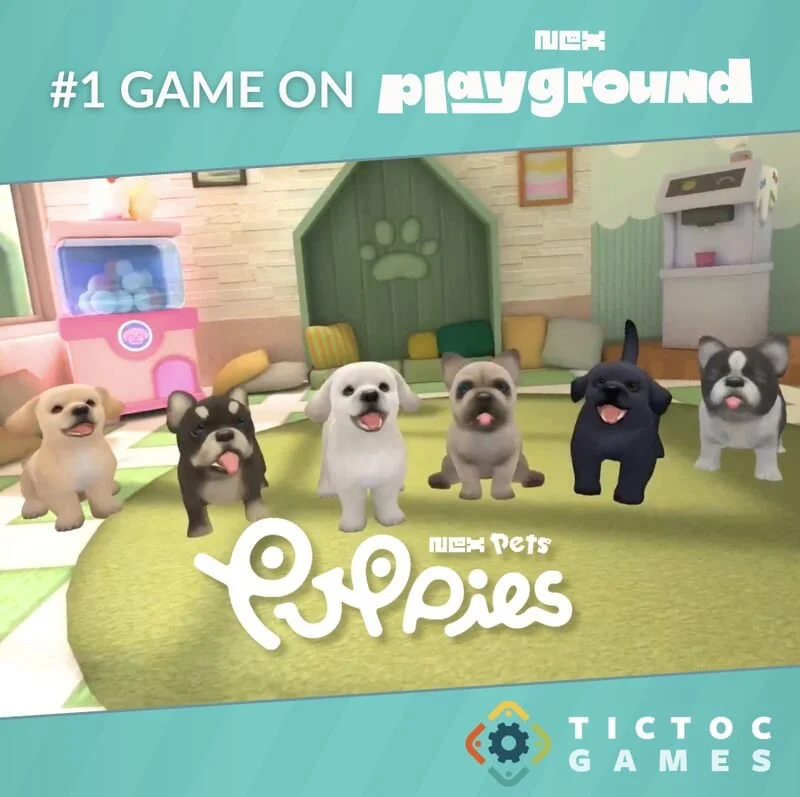
#1 Nex Playground Game
Reached #1 on Nex Playground for 5 consecutive weeks
Continues to remain within the top 10 titles on the platform
Reflection
I joined the project after many core interactions and systems had already been approved and implemented.
In hindsight, I would have spent more time earlier in development critically evaluating those initial designs, particularly through the lens of accessibility, clarity, and younger player behavior.
Identifying these UX issues sooner would have reduced iteration time and allowed the team to focus more heavily on polish ahead of launch.